> EVIDENCE TERMINAL :: AC-LKKTETQ // THYMOSIN-BETA-4

TB-500 is the synthetic actin-binding fragment of thymosin beta-4, logged here against the research record.

Seven residues, one actin-binding motif, zero completed controlled human trials of the heptapeptide. The mechanism, the studies that hold, and the gaps that read NULL — cited line by line.

Phosphor-green CRT-terminal wireframe schematic of a single globular actin monomer bound one-to-one by a seven-bead peptide fragment with cyan capping nodes, on a cold green-black scanlined ground

What the TB-500 record actually logs

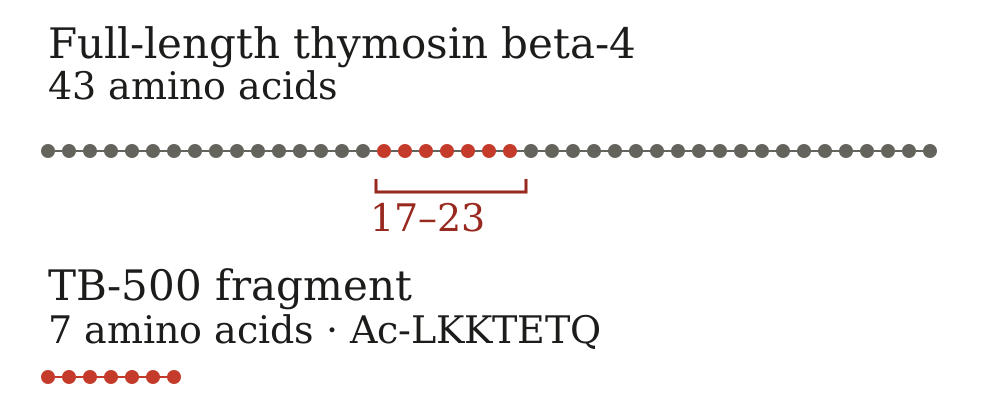
TB-500 is the synthetic, N-acetylated heptapeptide Ac-LKKTETQ — residues 17–23 of thymosin beta-4, the conserved actin-binding region of the protein. That is the whole molecule: seven amino acids, roughly 889 Da, carrying the motif by which the parent protein grips monomeric actin. It is not an FDA-approved drug, it carries no approved human indication, and the World Anti-Doping Agency prohibits it in and out of competition.

The record on TB-500 reads differently from most peptides in this register, and the difference is the point of this site. There are zero completed controlled human trials of the Ac-LKKTETQ fragment for any indication. The overwhelming majority of the efficacy literature — the wound-healing figures, the cardiac results, the angiogenesis data — was generated with full-length thymosin beta-4 (~4963 Da), not the 7-mer that commerce and anti-doping science call TB-500 [5]. Whether the isolated fragment reproduces the parent protein's effects at the doses used in peptide research is not established in controlled human trials [10].

So this is a read-only evidence terminal, not a storefront. Each finding below is logged with the species it was measured in, the dose and route, and a status flag: LOGGED for what the published research genuinely establishes, PRECLINICAL for animal-and-in-vitro-only signals, and NULL for the records that simply are not there. Where a finding used the full-length protein rather than the fragment, that is flagged as a checksum mismatch — because it is one. The TB-500 dosage in the research literature and the TB-500 legal status and 503A category each get their own page.

What Is TB-500?

TB-500 is a synthetic, N-acetylated heptapeptide with the sequence Ac-Leu-Lys-Lys-Thr-Glu-Thr-Gln, corresponding to residues 17–23 of the endogenous 43-amino-acid protein thymosin beta-4 (gene TMSB4X). That LKKTETQ segment is the actin-binding core of the beta-thymosins. The fragment itself is a laboratory construct, not an endogenous species — it is the parent protein, not TB-500, that is present in nearly every human cell and released by platelets and macrophages at sites of injury.

What is TB-500?

TB-500 is the synthetic Ac-LKKTETQ heptapeptide carrying the actin-binding motif of thymosin beta-4 — residues 17–23 of that protein. It is a research and veterinary-context substance, roughly 889 Da, with no approved human indication. In commerce and in the anti-doping literature the name denotes the fragment; most published efficacy data, however, were generated with the full-length protein.

What does TB-500 stand for and what does TB stand for in TB-500?

The "TB" references thymosin beta-4. TB-500 is the trade and research designation for the synthetic Ac-LKKTETQ actin-binding fragment of that protein. It is a product name attached to the 7-mer, not a separate chemical class — and it is not, as the suffix might suggest, a dosage figure.

What is TB-500 used for in research?

In animal and in-vitro research, thymosin beta-4 and the actin-binding region carried in TB-500 are studied for wound healing, cell migration, angiogenesis, cardiac and neurological repair, and anti-fibrotic effects [5]. Human efficacy of the isolated 7-mer is unproven; no controlled human trial of the fragment has been completed for any indication [10].

TB-500: The Synthetic Ac-LKKTETQ Peptide

The TB-500 peptide is the short, acetylated actin-binding fragment of thymosin beta-4 — and keeping it distinct from the full protein is the single most important read on this molecule. Full-length thymosin beta-4 is 43 residues and ~4963 Da. The TB-500 peptide is 7 residues and ~889 Da. They share a sequence motif; they are not the same chemical entity, and a finding measured on one is not automatically a finding about the other.

The fragment carries a WH2-type actin-binding motif. In the full protein, that motif lets thymosin beta-4 bind monomeric (globular) actin one-to-one and cap both ends of the monomer, holding a buffered reserve of unpolymerized actin and regulating cytoskeletal dynamics — a structure resolved to 2 Å by X-ray crystallography of a gelsolin-domain-1–thymosin beta-4 hybrid bound to actin [1]. The TB-500 peptide isolates that motif. What it does not isolate is the rest of the protein, or the N-terminal cleavage product Ac-SDKP — a separate anti-fibrotic, angiogenic fragment generated from full-length thymosin beta-4's other end, not from the C-terminal-region TB-500 sequence.

That is the recurring caveat on this site, flagged wherever it applies: TB-500 (Ac-LKKTETQ) ≠ full-length thymosin beta-4. The thymosin beta-4 parent protein carries most of the data; the fragment carries the name.

How TB-500 works — the actin mechanism

How does TB-500 work?

TB-500 carries the LKKTETQ actin-binding motif of thymosin beta-4, the body's principal G-actin-sequestering peptide. Full-length thymosin beta-4 binds monomeric actin 1:1 to regulate the cytoskeleton, cell migration, angiogenesis, and anti-inflammatory and anti-fibrotic signaling [1][5]. Whether the isolated 7-mer reproduces this at research doses is not established in human trials [10].

The mechanism, where it has been worked out, is consistent and well-described — for the protein. Thymosin beta-4 binds and sequesters G-actin, controlling the pool available for filament assembly and therefore cell motility [1]. In injury models it is associated with accelerated migration of keratinocytes, endothelial cells, and progenitor cells; with angiogenesis; with reduced myofibroblast number and scar formation; and with anti-apoptotic and anti-inflammatory signaling [5]. In mice it forms a complex with PINCH and integrin-linked kinase to activate the survival kinase Akt [2].

The honest line is that this is the parent protein's mechanism. The fragment shares the binding motif, but the leap from "shares a motif" to "reproduces the protein's effects in humans at research doses" is exactly the gap the record leaves open. The full breakdown sits on the human clinical trials on TB-500 page.

The record at a glance

Four findings carry a LOGGED flag — they are what the published literature genuinely establishes. Irobi and colleagues resolved the 1:1 G-actin sequestration structure at 2 Å [1]. Malinda and colleagues measured re-epithelialization gains of 42% at four days and up to 61% at seven days in a rat full-thickness wound model treated with thymosin beta-4 [3]. Bock-Marquette and colleagues showed thymosin beta-4 activating PINCH–ILK–Akt and improving cardiac function after coronary ligation in mice [2]. And in the one randomized, placebo-controlled human study, intravenous full-length thymosin beta-4 was well tolerated to 1260 mg in 40 healthy volunteers, with no dose-limiting toxicities [6].

Every one of those four was run on the full-length protein. None was run on the TB-500 heptapeptide. That is not a footnote — it is the structure of the evidence. Read the TB-500 side effects and safety signals and the TB-500 and BPC-157 comparison before drawing conclusions, and see the frequently asked questions about TB-500 for the short-form answers.